Congenital hand anomaly - Polydactyly (extra digits). The first photo shows the long-term result after the removal of a Wassel type IV thumb duplication. The second post-operative photo presents the final outcome.
before
after
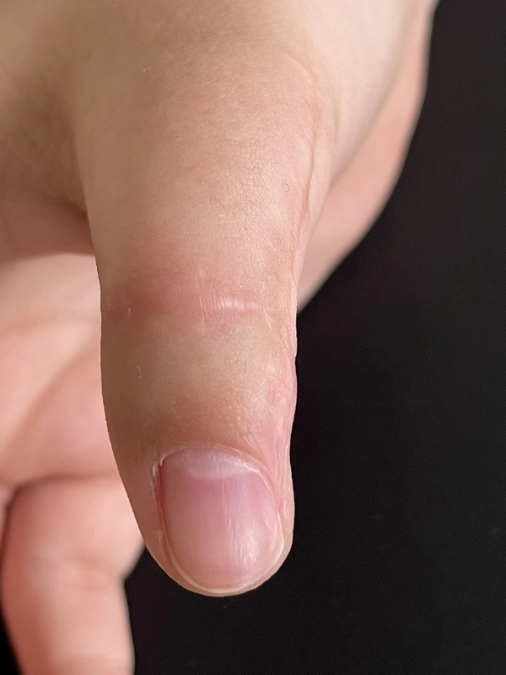
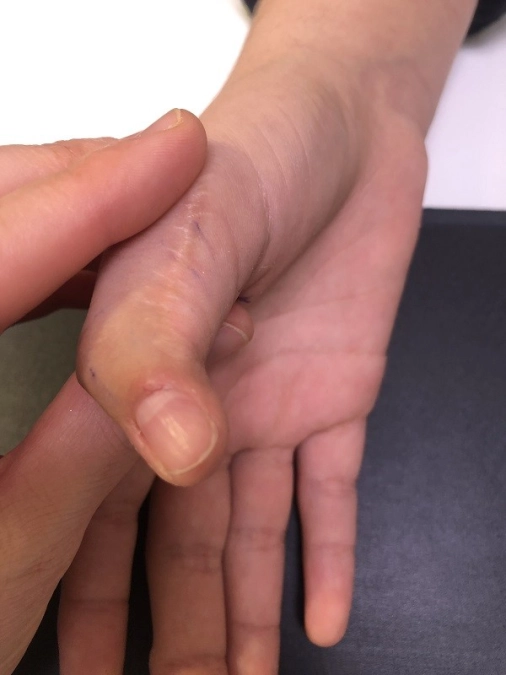
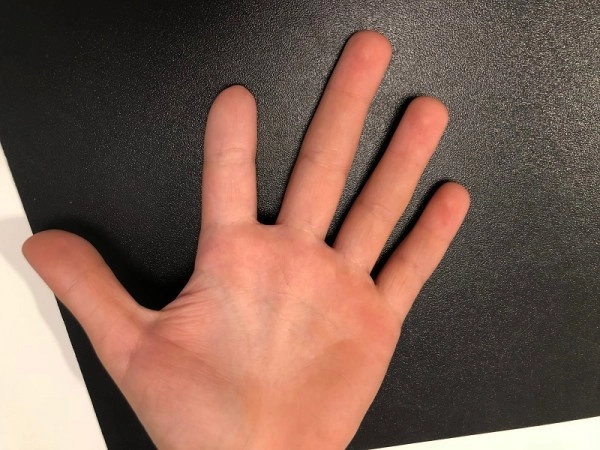
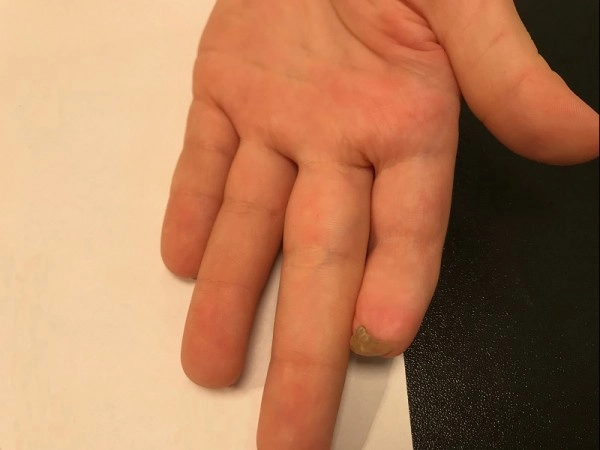
Condition after an index finger injury involving amputation of the distal phalanx.
before
after
Complex congenital hand anomaly - cleft hand with the absence of the 3rd ray, accompanied by underdevelopment and syndactyly of the 1st and 2nd digits. A single-stage surgery involving cleft closure and syndactyly release resulted in improved hand function and aesthetic appearance.
before
after
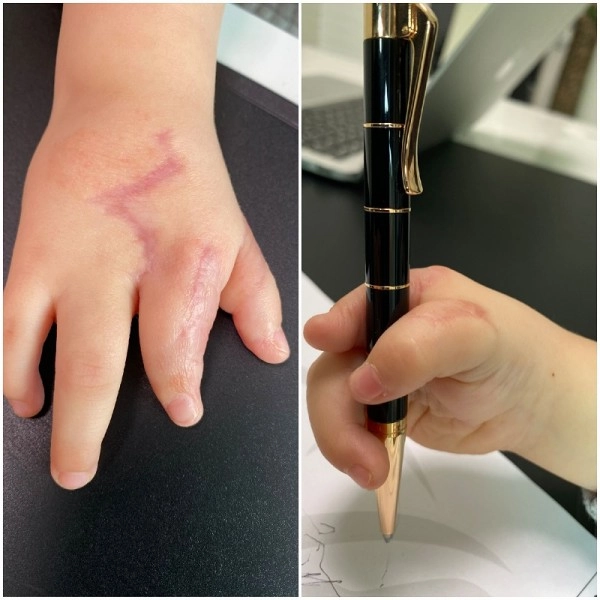
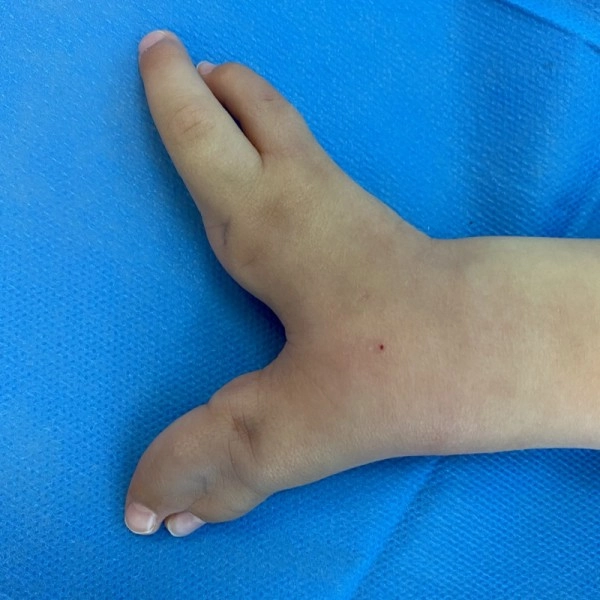
Pollicization - surgery for a congenital hand anomaly. Pre-operative condition and photo taken immediately after the procedure.
before
after
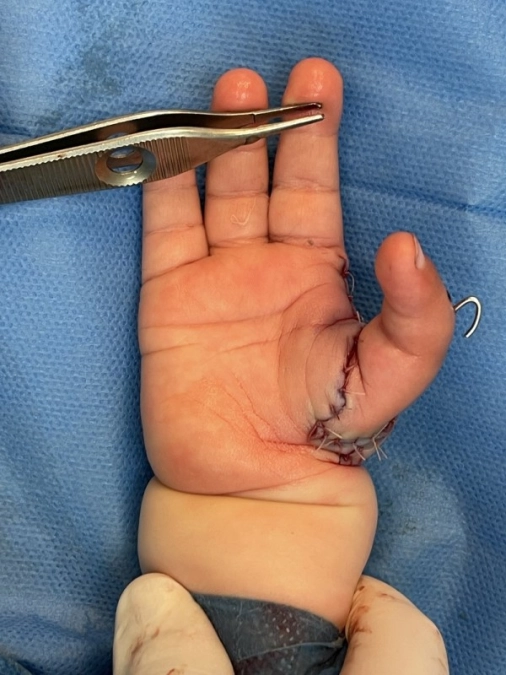
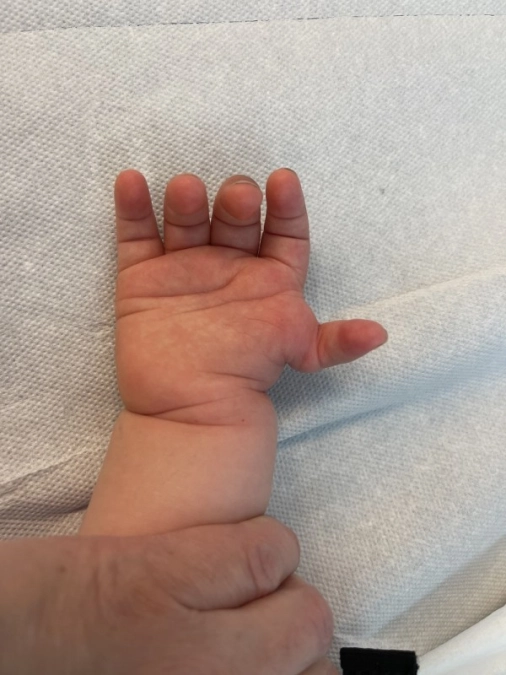
The hand of a 1.5-year-old child, 2 months after index finger pollicization—a procedure to reconstruct a thumb that failed to develop properly due to a congenital anomaly, using the second digit.
before
after
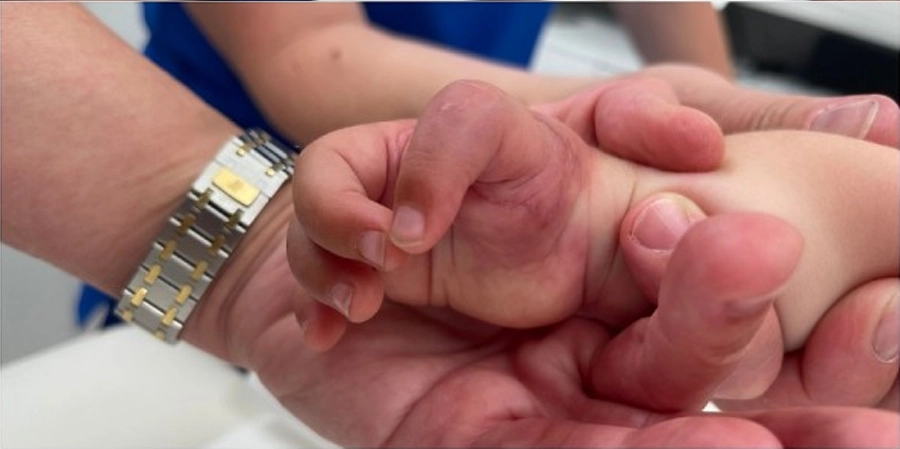
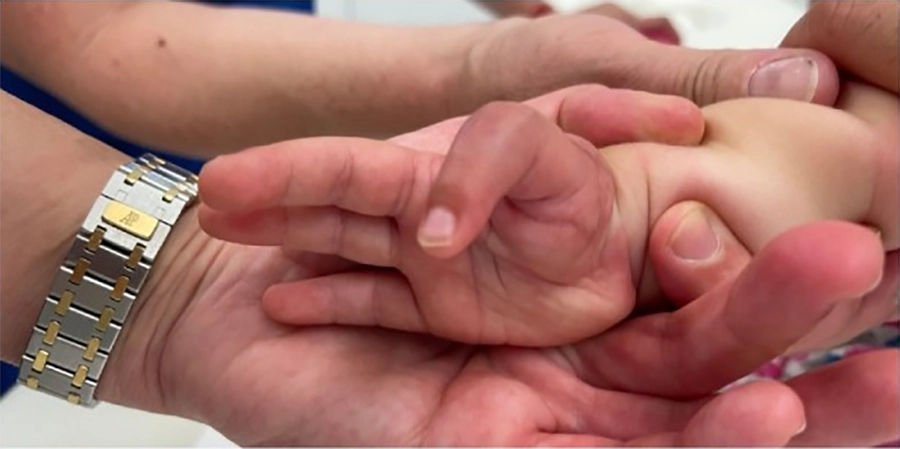
Streeter's dysplasia, also known as amniotic band syndrome (ABS). During fetal development, thickened amniotic bands can entangle the fingers of the fetal hand, leading to the formation of constriction rings, fusions, or even amputations at various levels of the digits or limbs.
before
after
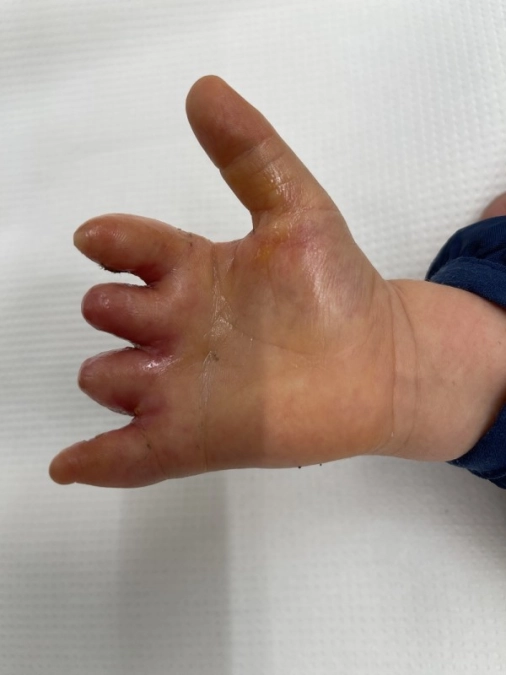
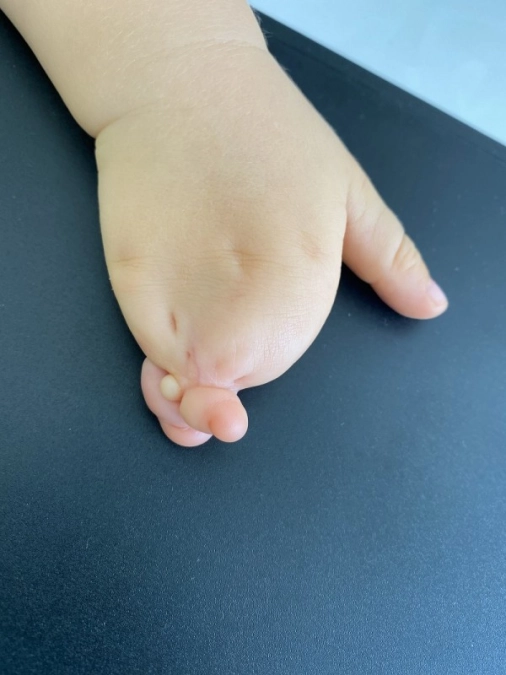
Brachysyndaktylia
before
after
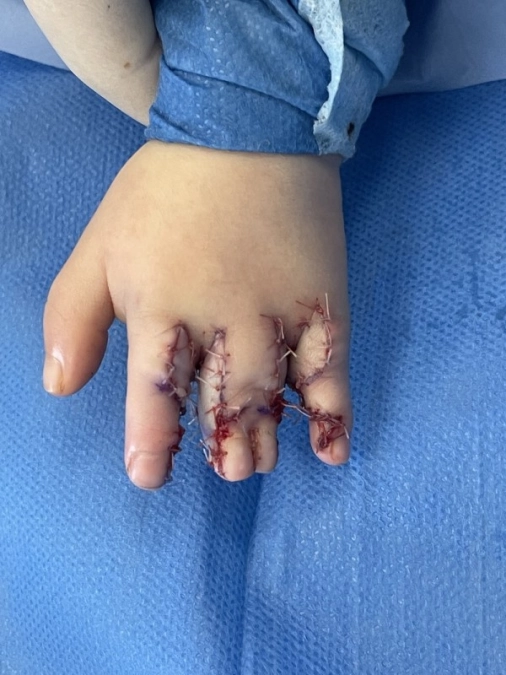
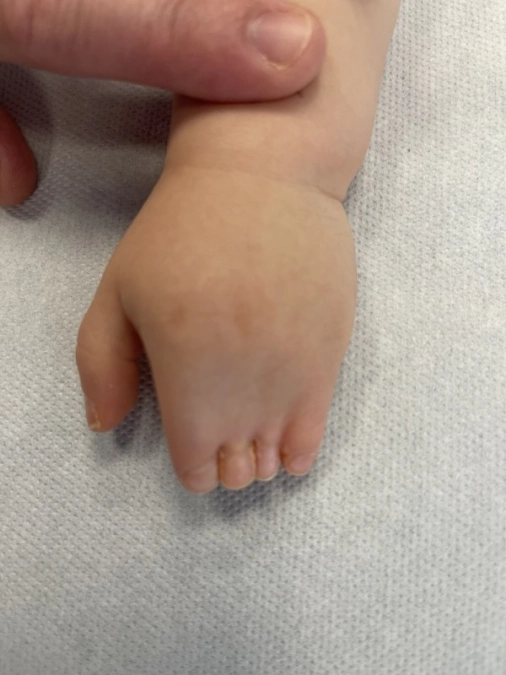
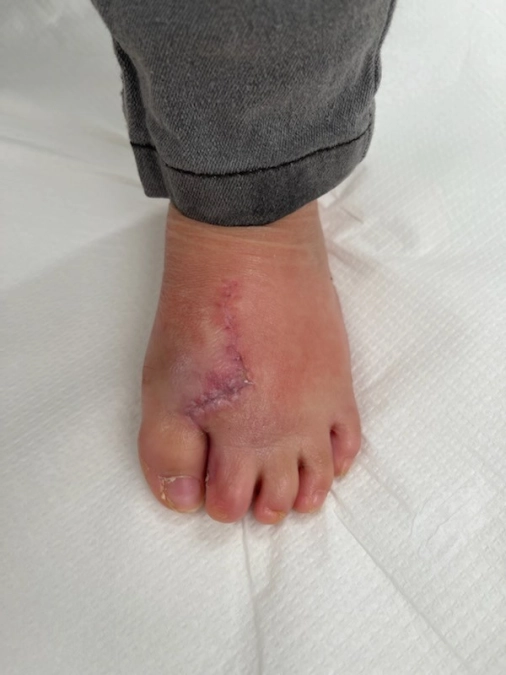
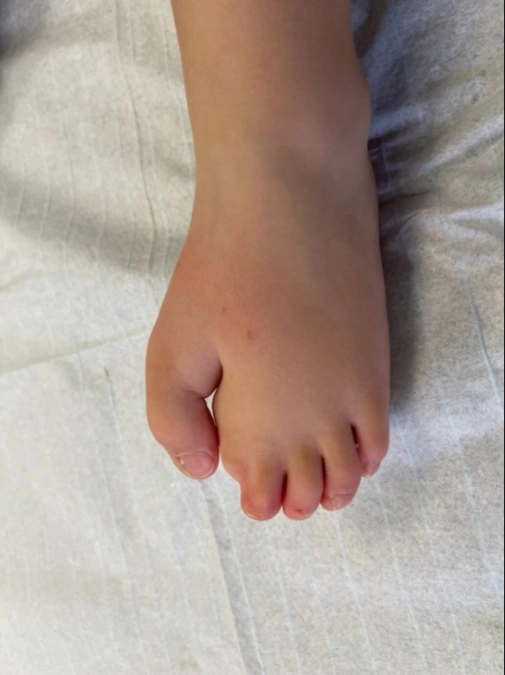
Congenital complex cleft foot with partial absence of the midfoot and toes. Despite the missing toes, the width of the child's foot would not have allowed for the fitting of a shoe. The cause was a transversely positioned accessory bone. The surgery was performed at 10 months of age.
before
after
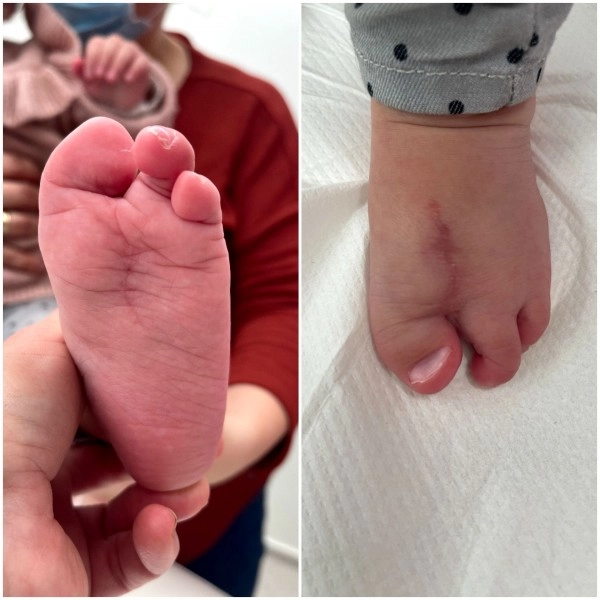
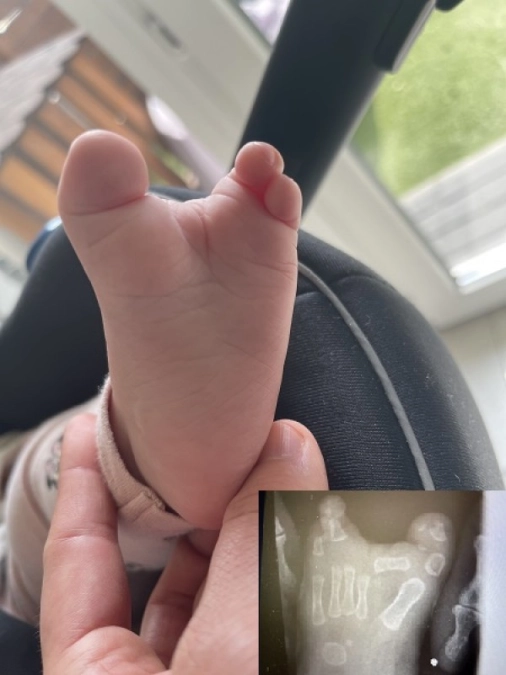
Cleft foot. Post-operative photo – 3 weeks after surgery.
before
after